
Custom Insulated Bags
Custom Insulated Bags are soft carrying bags developed with a specified outer shell, insulating layer and liner. Lunch bags and larger soft coolers differ in opening, useful space and carrying arrangement. Temperature retention depends on the complete construction and use conditions, not the product name alone.
Asia Supply Source helps retail brands, outdoor suppliers, distributors and promotional buyers source custom insulated bags from China. We coordinate product references, specifications, artwork, sample review, packing and production follow-up around the agreed project. Send the destination market and intended use with your inquiry so the proposed construction and documentation can be reviewed together.
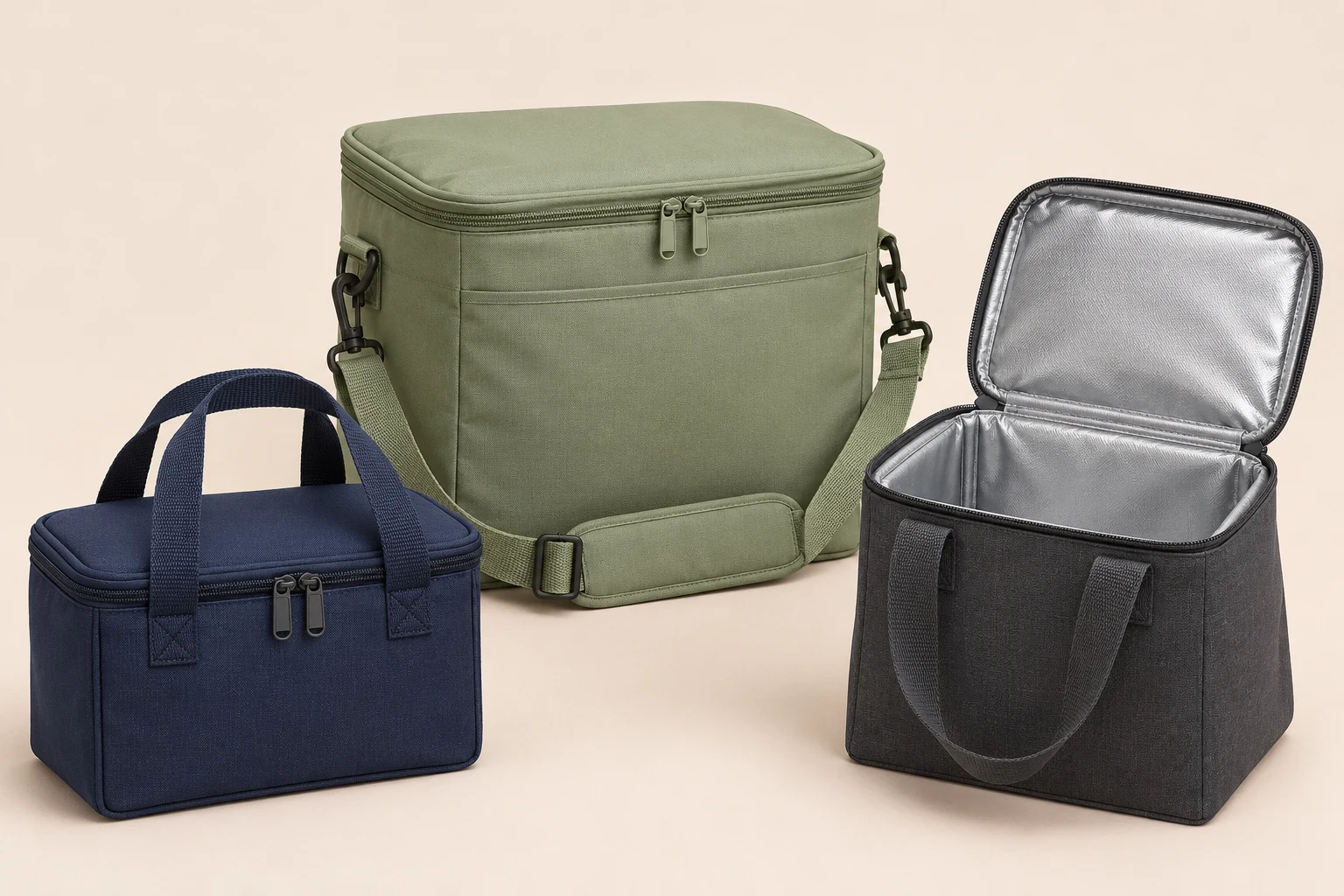
Table of Contents
Custom Insulated Bags: styles and uses
Choose custom insulated bags around the intended containers, carrying distance and packing method. State whether the brief is for a compact lunch bag, a larger cooler or a coordinated promotional item. Identify separately any inserts, ice packs or food containers that should be included.
- Lunch-bag format: An opening and cavity sized around the buyer’s actual lunch containers.
- Soft cooler: A larger structured bag with specified lid, liner and handle or shoulder arrangement.
- Insulated tote: A carrying shape with defined closure and inner space rather than an assumed bottle count.
- Set supply: A separate bill of contents for bags, containers, inserts and any packing assembly.
Shell, insulating layers and liner
For custom insulated bags, specify each layer: outer textile, insulating material and thickness reference, inner liner, reinforcement and base construction. A silver-colored liner does not identify its composition or prove food-contact suitability. Explain whether food touches the liner directly or remains inside separate packaging.
Define the closure, zipper path and seams with the production department. A spill-resistant material is different from a leakproof complete bag. Any cooling-duration, leakage or carrying requirement needs agreed conditions and suitable sample assessment. Avoid assigning a universal number of hours to an untested concept.
Custom Insulated Bags specification guide
Describe useful internal measurements and the intended container layout. A nominal capacity or external dimension does not establish how many bottles, containers or ice packs fit together.
| Specification | Details to agree | Sample check |
|---|---|---|
| Usable space | Internal measurements and actual container arrangement | Fill and close a sample with representative items. |
| Layer construction | Shell, insulation, liner and base references | Inspect the proposed complete assembly. |
| Opening and carry | Zipper/lid, handles, strap, attachment and hardware | Check access and carrying under agreed conditions. |
| Branding and pack | Artwork, labels, accessories and folding format | Confirm complete selling units and packed dimensions. |
Sample checks before production
Review custom insulated bags as complete assemblies, with the intended contents or suitable fit references. Agree the purpose and conditions of any performance assessment before the sample is prepared.
- Check insertion, internal fit and closure with the full planned contents.
- Inspect the liner, seams, zipper path and insulating-layer arrangement.
- Review handles, strap adjustment and attachment construction.
- Assess any agreed temperature, leakage or cleaning requirement using a documented method.
- Confirm artwork, accessory counts, folded packing and carton information.
Keep the approved layer references, internal layout, artwork, assessment conditions and finished bag sample together as a versioned reference. Our custom product sampling guide explains how a documented approval supports production follow-up. Changes after sample approval should be recorded and assessed before production continues.
Custom Insulated Bags RFQ checklist
A custom insulated bags RFQ should separate product construction from performance requirements. Specify what is carried and how it is packed, rather than relying on a generic capacity statement or an attractive cooler photograph.
- Intended contents, market, user group and direct/indirect food-contact situation.
- Internal space, external size and container layout.
- Shell, insulation, liner, reinforcement and color references.
- Closure, handle/strap, accessories and any cleaning requirement.
- Logo files and any specifically required performance assessment.
- Quantities by version, empty/filled supply, packing, destination and arrival date.
Use our custom product RFQ checklist to organize the inquiry and compare the same scope. Minimum quantities, sample costs, tooling where relevant, prices and timing are confirmed from the actual specification and quantity breakdown; no single figure applies to every custom insulated bags project.
Frequently asked questions
How long will an insulated bag keep contents cold?
There is no universal duration. Starting temperature, contents, coolant, ambient conditions, opening frequency and construction all affect the result. Define the requirement and review relevant evidence for the actual product.
Are all cooler bags leakproof?
No. Liner material, seams, closures and construction matter. State the required use conditions and review a complete sample against an agreed assessment.
Are ice packs or containers included?
Only if listed and agreed. Define each accessory and the quantity per selling unit separately from the bag.
Can a lunch box or particular bottle fit?
Send the full dimensions, count and packing arrangement. Test a representative layout in the proposed bag instead of inferring fit from the external size.
How are pricing and sample timing established?
The layer specification, construction, size, artwork, accessories, quantity split and packing determine the proposal. Any required assessments should be identified at inquiry stage.
Related custom products
Compare custom bags and roll-top dry bags for different carrying briefs. Neoprene can coolers are sleeves for individual containers, rather than multi-item insulated bags. Define each product separately in coordinated gift sets.
Start a custom insulated bags inquiry: send your product reference, specification, artwork and quantity breakdown so we can help coordinate the sourcing proposal and sample review.